
 SHARE THIS
Countless minds have taken queer theory across disciplines, from literature to ecology, and I am inspired to extend it beyond Earth. I have long wondered how queerness might guide us toward a Cosmos understood through lenses free of violence, bias, oversimplification, and objectification. In the words that follow, I argue for a queering of cosmology, not as an academic exercise, but as a need to reimagine how we understand, relate to, and act within the Universe we inhabit.
As a rule of thumb, it is wise to be suspicious of any binaries we encounter. Unless you are a computer, the world is far more than a binary system. It is layered, chaotic, errant, bewildering, and, for the most part, incomprehensible. Consider the divide between Earth and outer space. There is something troubling about constructing a single immense ‘other’ beyond our earthly grounds, set apart from ‘us,’ to contain everything that exists out there. This division, deeply embedded in our histories, maps, and stories, breeds separation. The truth is simple: Earth is in space. We are in space, and nothing could be more cosmic than living ‘in‘ a celestial body.
In the 1950s, Theodore von Kármán proposed an imaginary line dividing Earth and space at 80 to 100 kilometres above sea level. Though useful for law and the military, it draws a false boundary. The reality is far queerer. The atmosphere flows past the International Space Station, past our satellites, and even, as drifting hydrogen atoms, beyond the Moon. One could say the Moon is within our atmosphere, just as Earth lies within the atmosphere of the Sun, and the solar system within an interstellar cloud of dust. The edges of the Universe are more elusive than we imagine. What we picture as solid boundaries are, in truth, porous membranes. Existence blends and bleeds into itself, touching in degrees and durations, in contours that resist geometry, in formations that defy form. The Cosmos, by nature, is fluid.
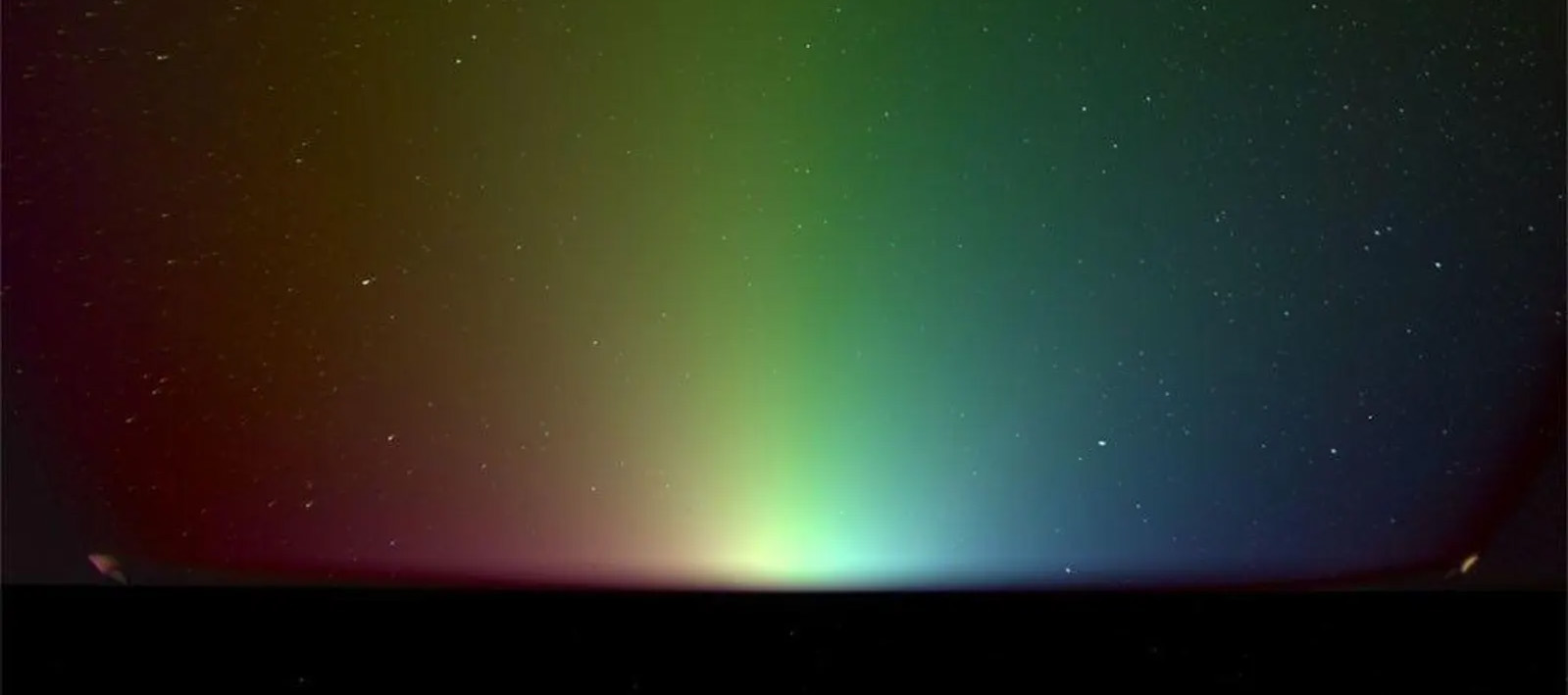
Observe the moment between day and night - that moment when the sunset reveals a slow and evolving alchemy of colour. Blues deepen into golds; oranges bloom from the mingling of light and suspended dust, only to surrender to fleeting violets and pinks. One edge of the horizon darkens while the other still glows. Then, almost imperceptibly, the radiance of day fades and the first stars emerge from the deepening dark.
To mark the exact instant when day ends and night begins is as arbitrary as imagining someone unplugging the Sun. The Universe resists such orderly binaries. Day and night are coarse terms, too narrow to capture the shifting spectacle of Earth’s rotation. Among the Indigenous peoples of the Andes, this binary is a curiosity. For them, there is no rigid divide, only subtle transitions, and what matters is not naming the extremes but recognising the continuum and the interdependence between them.
Consider how we classify stars as 'alive' or 'dead', planets as 'habitable' or 'uninhabitable', galaxies as 'active' or 'passive'. Even our ethical compass in Space is shaped by a binary: is there life, or is there not? If the answer is no, the path is cleared to use, extract, and exploit the 'space resource' at hand. Stripped of nuance, worlds are sorted into those that serve human purpose and those that might be spared.
To queer the existences in the Cosmos is to honour their being, not for what they do for us or might contain, but simply for what they are. Why is the Moon important? Or a cloud-wrapped planet in the far reaches of a system we barely know? Because they exist - in what we know of them and just as much in what we do not. A queer theory approach lingers in liminal spaces and gradual transitions, where categories blur. Brown dwarfs, for example, are something between a star and a planet, challenging our neat taxonomies and reminding us that the Cosmos thrives in the in-between.
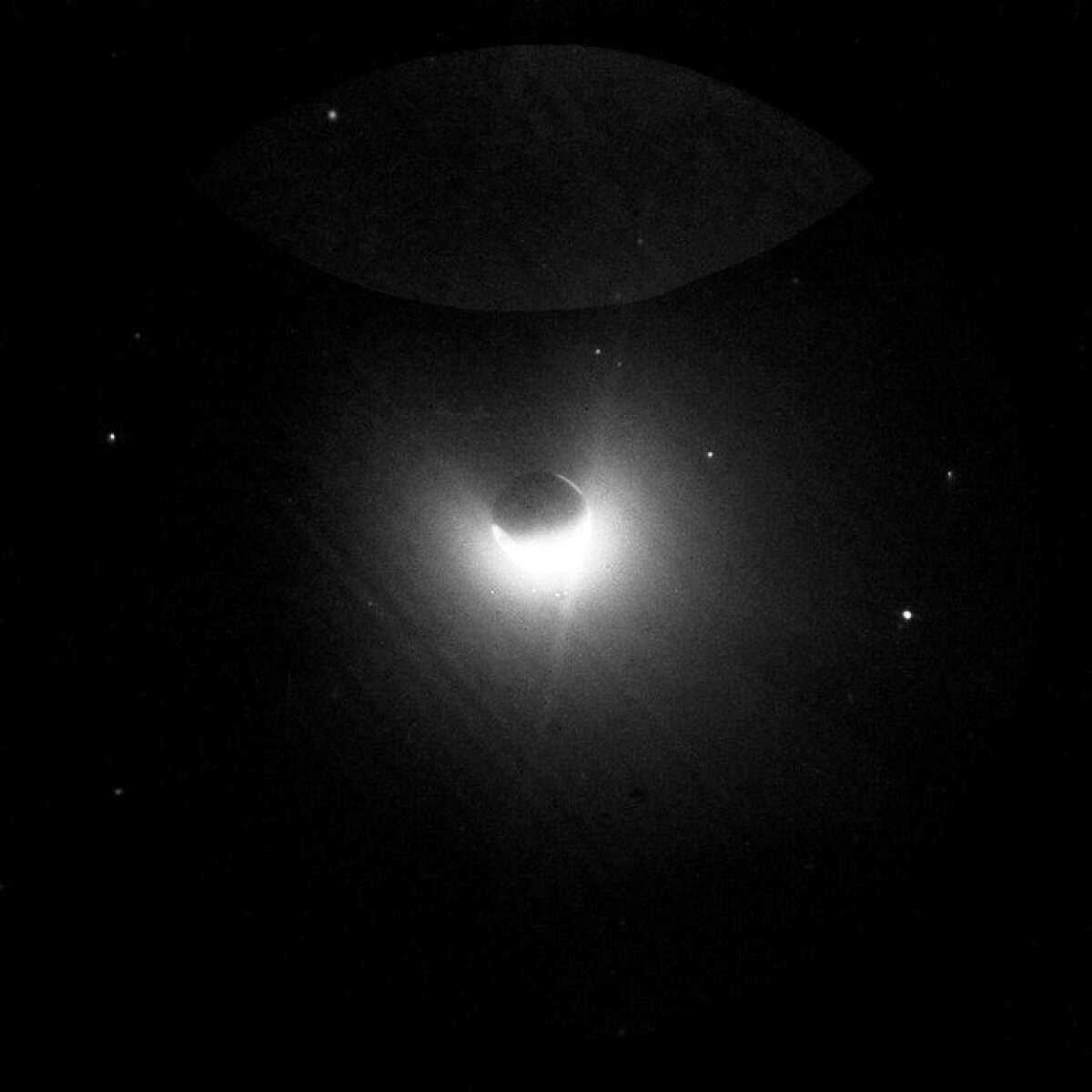
Language is never neutral. The metaphors we use to describe cosmic phenomena carry cultural baggage that shapes how we understand and value celestial bodies. We speak of “galactic cannibalism”, imagining majestic mergers as acts of hunger and devouring. We describe a planet’s loss of magnetic field as “death”, as though a world were a body slipping into stillness. We speak of “planetary migration” when orbital mechanics shift gas giants inward.
These metaphors import terrestrial narratives of violence, consumption, and displacement into cosmic contexts. What if galactic mergers are not acts of cannibalism but of intimate communion? What if stellar evolution represents not death but transformation into new forms of cosmic agency? What if planetary migration suggests not displacement but exploration, play, or dance? What if supernovas are not explosions but cosmic bloomings that pollinate the Universe? This is not mere poetic license but recognition that our metaphors shape how we understand the world.
Should the Cosmos be a stage for familiar narratives of life and death, hunger and inheritance, beginnings and ends? This is not an easy question, for human culture was born from crafting stories in the stars. We rely on sensemaking to fill the void of existence. Perhaps a good step is to reflect on the language we use in cosmology, to see whether our desires for conquest, annihilation, and destruction are woven into it. Take, for example, the way we say a star explodes in a supernova, evoking images of violence and ruin. What if we reframed this event as a blooming, an incandescent flowering that pollinates the Universe?
Dominant cosmology tells a relentlessly linear story: Big Bang origin, stellar evolution, galactic collision, heat death ending. Cosmology is often told as a linear script but what if it could embrace other temporalities? Could there be cosmologies shaped by cycles, returns, and spirals? Many cultures tell stories that do not follow the three-act structure, but weave narratives within narratives, petals around a shared centre, loops that return yet never repeat. The Cosmos feels closer to these forms, where moments fold into one another, where all times might coexist, layered and simultaneous. Multiverse theories propose infinite parallel timelines where every path is taken and time fractures into a prism rather than stretching into a single line. These ways of storying the Cosmos refuse the rule of a singular narrative. They release us from the forward march of time and the myth of destiny, offering instead a Cosmos that is plural, recursive, and strange.

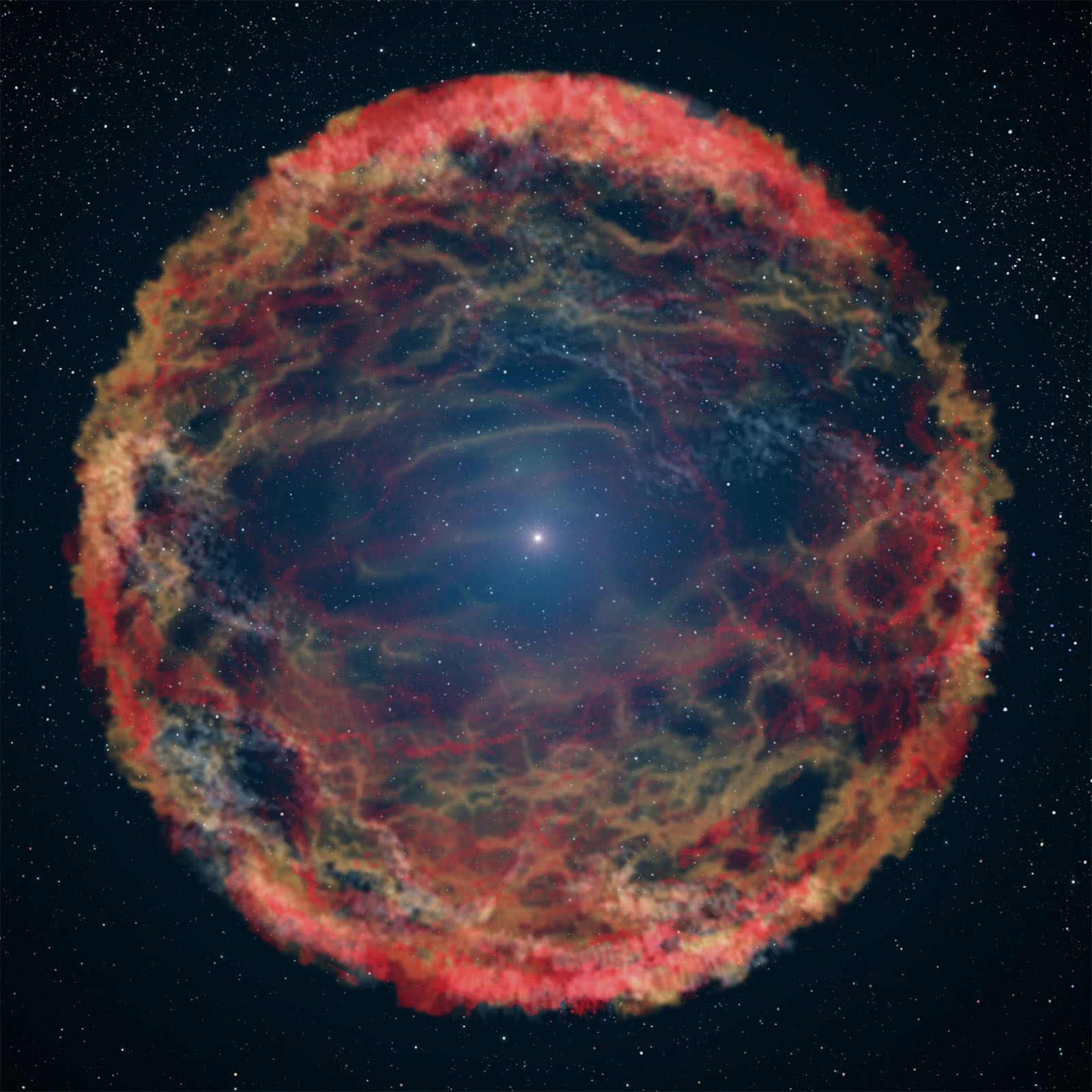
Queering cosmology reveals the universe as a space of infinite possibility rather than predetermined destiny. It shows us cosmic phenomena that resist binary categories, linear temporalities, and hierarchical arrangements. To queer the Cosmos is to let it breathe beyond worn-out paradigms, to let it shine with meanings born from non-dominant narratives, and to refuse the need for a single origin or final destination. It is to envision a Universe not bound to a script of progress and resources, but alive in flux, folding, and intimately interconnected.
This is not a rejection of empirical science but an expansion of it - a recognition that all knowledge is situated, all observation is relational, and all understanding emerges from particular positions within the Cosmos we seek to comprehend. By bringing queer theory into dialogue with cosmology, we don't diminish scientific insight but enhance it, making it more honest about its assumptions, more inclusive in its methods, and more ethical in its implications.
The Cosmos, like queerness itself, resists containment within existing categories and narratives. It blooms in uncertainty, thrives in ambiguity, and creates connections across unthinkable distances. To queer our understanding of the Cosmos is to celebrate its radical alterity while recognising our intimate participation in its ongoing becoming.
Perhaps most importantly, queering cosmology opens space for wonder. In a Cosmos understood through queer lenses, we find not a machine to be mastered but a home to be cherished, not resources to be extracted but relationships to be cultivated, not a backdrop for human drama but a blooming commons shared with a multitude of existences beyond us.
Final note: For years I have waited for someone to cast the first words into these ideas for one thing is certain: the sky is wide enough to hold many ways of knowing. I hope these thoughts will be carried further and refined by scholars who seek to reimagine the Cosmos as we know it.
